
02 May Blessed New Month of May
Blessed New Month of May. This is a wonderful time to awaken the principles and energies of Sango and Aganju within you. Being a warrior, powerful energies of destruction and rebuilding serves as a great energy to invoke in your life and your home. The struggles and what seems like distractions from our true Divine selves, can be a magnet that draws us to Sango and Aganju in this world. We are grateful for their energy. My dear Orisa, we supplicate you to surround us with your power to bring us safety in our homes, family, and community. Keep us safe from all negative seen and unseen forces. We welcome your mother Yemoja to assist us in cooling any energy that could escalate the wars. We thank Obatala’s wisdom to give cool heads to all leaders as we come together to see the change, be the change and bravely bring the change that is meant to be.
Sango and Aganju guide prayers for direction in lonely times or during hard journeys. Mountains and iron-rich soil hold their calm strength. They provide grounding and protection in Yorùbá rites.
Sango is the Orisha of fire, lightning, and thunder. He is also the ruler of the sacred bata drum. He symbolizes passion, masculine virility, and political prowess. Historically, Sango is documented as the fourth king of the Oyo Empire in Yoruba land, Nigeria where he ruled for over four decades. The rule of Sango was so influential that after his death he was defied to the status of an Orisa. There are many different accounts of his life and death. His energy represents a temperament that can grow to anger and is said to have been born with war upon his head. This is symbolized by the double-edged ax which is one of his implements. In addition, Sango represents the energy of prolific business and communication skills. He had three wives: one was Osun, who was the river goddess, the second Obba, who was also a river goddess, the third wife, Oya was said to be his favorite wife and the one who stole the secret of his power. Sango colors are red and white and his number is six.
Cleansing
Simple Ways to Honor Sango
- Light a red and white candle and meditate
- Speak affirmations of power and confidence
- Dance, drum, or move your body (Sango loves rhythm)
- Stand in your truth boldly without fear
Aganju is the Orisa that symbolizes the core of the earth, the desert, and the volcano. He is also known as the ferryman who carries people from one side of the river to the other. Aganju’s energy represents the ability to be innovative and be forward thinking. Aganju’s symbols are volcanic lava, bull horns, and the sun. He is the Orisa of great force and can cause major upheavals on the earth through volcanic eruptions and earthquakes. In this energy Aganju has the ability to propel us forward to think in new ways and challenge others and society. Aganju is depicted as the father of Sango in some apataki, and a younger brother of Sango in others. Among the Yorubas of Nigeria, Aganjù is a renowned warrior-king from present-day Oyo State. He is said to walk with a sword and fight by shooting fire, which is unlike his brother/son Shango who fights using thunderstorms and lighting. Aganjù is the bearer of burdens, defender of the helpless and enslaved. As such, he is a major symbol of African resistance against enslavement by European colonizers. His name comes from the Yorùbá words that mean “voice of the desert, power from another world.” Àgànjú rises from old Yorùbá stories. He comes from the meeting of earth and fire. In early tales, he ruled the hot land of Shákí as a brave warrior. He kept order with firm action. When he faced rivals, he left his home and walked through wide deserts. He moves as a guide, a protector, and a carrier of heavy burdens. Aganju is the one who helps keep the balance. With Ọbàtálá, he shows how fire can break the ground open and make space for new life. They point to renewal that rises after destruction. People use this power in ebó when they need a breakthrough during illness or a heavy change. The wilderness and desert belong to him, too. These empty places test the human spirit. Aganju’s colors are red, dark maroon and his number is nine.
Cleansing
Begin on a Tuesday or during a waxing moon. Wash with herb water made from basil and rum. Say, “Aganjú Soláyì, clear my path.” Fast for 9 hours. Do not eat red meat. This helps you feel his earth energy. It keeps the spirit clean before touching his force.
Altar setup
Place a burgundy cloth on a firm table. Set down 9 stones, a small iron shovel shape, and one gold candle. Add volcano soil or desert sand to anchor the space. Face the altar east to meet the sunrise. Keep Yemayá items nearby if you want to balance water and earth.
Offerings (Ebó)
Give 9 roasted corn cobs, tobacco, rum, or, with a babaláwo’s guidance, a goat. Pour the offerings and say clearly what you need. You may ask for open roads or strong endurance
Prayer to Aganju
Speak prayers like, “Aganjú, king of mountains, carry my burdens with your mace.” Dance with firm steps that echo eruptions and long desert walks. In Brazilian Candomblé, worship centers on Aggayú-Solá, with sun dances and father-earth offerings. In Puerto Rican and U.S. circles, people combine vevès with modern home altars. Many use personal prayers during travel, struggle, or a family need.
Resources: I Hear Olofi’s song Ayoka Wiles Quinones (Olosunfemi), The Black Gods’, John Mason, Household Guide, Iyalode Yeyefini Efunbolade
“Many people in the world, facing major challenges at this time; However through the tools, blessings, wisdom, and power of these 4 Orisa we can find healing in community, families, as well as personally. Have a powerful awakening of Sango, Aganju, Yemonj, Obatala in you and your Family.” ~ Yeyefini Efunbolade
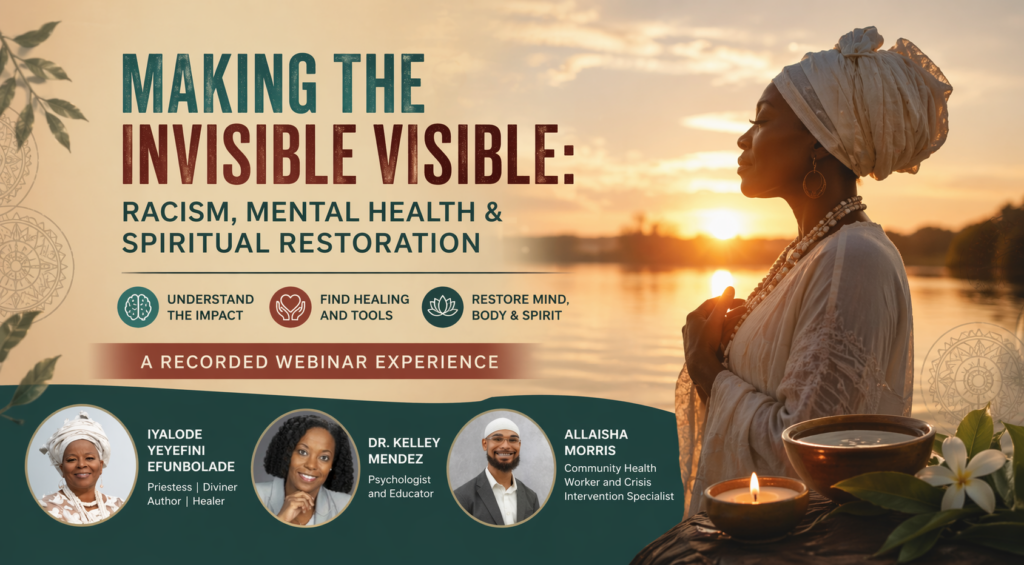
Download the Latest Webinar – Contains Obatala Rituals
Oshunrire
Posted at 12:56h, 02 MayModupe!! Peace and love
333985
Posted at 20:46h, 12 Maywish you all the best
Carrie Ruth Mingo Owens
Posted at 11:42h, 15 MayModupe and Adupe, please clarify in terms of meaning and usage. Always used Adupe to mean Thank You ..